In the world of higher education, particularly in large-lecture formats, the challenge is familiar: many students sit quietly, listen, perhaps absorb some content, but rarely speak.
In her role at the University of Birmingham Law School, Director of Education Elizabeth Przychodzki sought to transform that dynamic. Her solution? The interactive polling and Q&A tool Vevox. The result? A lecture experience that becomes more inclusive, participatory, and alive.
The importance of making classes inclusive
Przychodzki describes the issue succinctly: “We found that when you have large cohorts, many students are quite reluctant to raise their hand, to ask questions, or to respond in front of peers.” By introducing Vevox, she created a space where every student’s voice could be hear, without the fear of speaking up publicly.
“What Vevox offers is anonymity … it allows students who are nervous to engage, and in fact we’re seeing many more of them contributing than we ever would in the traditional format. With hundreds of students in a law lecture, the anonymity barrier-remover becomes powerful.
The methods to making classes more engaging
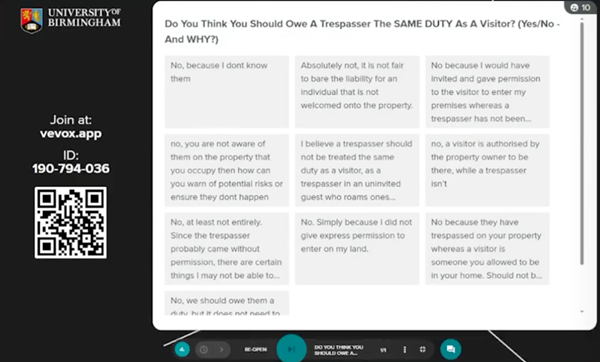
Przychodzki and University of Birmingham used Vevox in several key ways:
- Live polls: Asking students to respond in real time to questions during the lecture, thereby transforming passive listening into an interactive moment.
“When I launch a poll, I can instantly see the response. Students feel that their voice matters in that moment.”
- Anonymous Q&A: Students could submit questions at any time, without revealing their identity.
“Some of the most interesting questions we’ve received came anonymously and they were exactly the ones quieter students wouldn’t have asked aloud.”
- Live word clouds and ranking polls: To prompt reflection and debate among students.
“By seeing how the whole cohort responds, we get not only engagement but insight into what they understand or don’t understand.”
- Analytics and follow-up: Przychodzki emphasised that it’s not just about ‘clicking’ but about using the data.
“The analytics from Vevox allow me to see where to focus in next sessions, to adapt teaching so it meets students’ needs.”
The impact of Vevox in classes
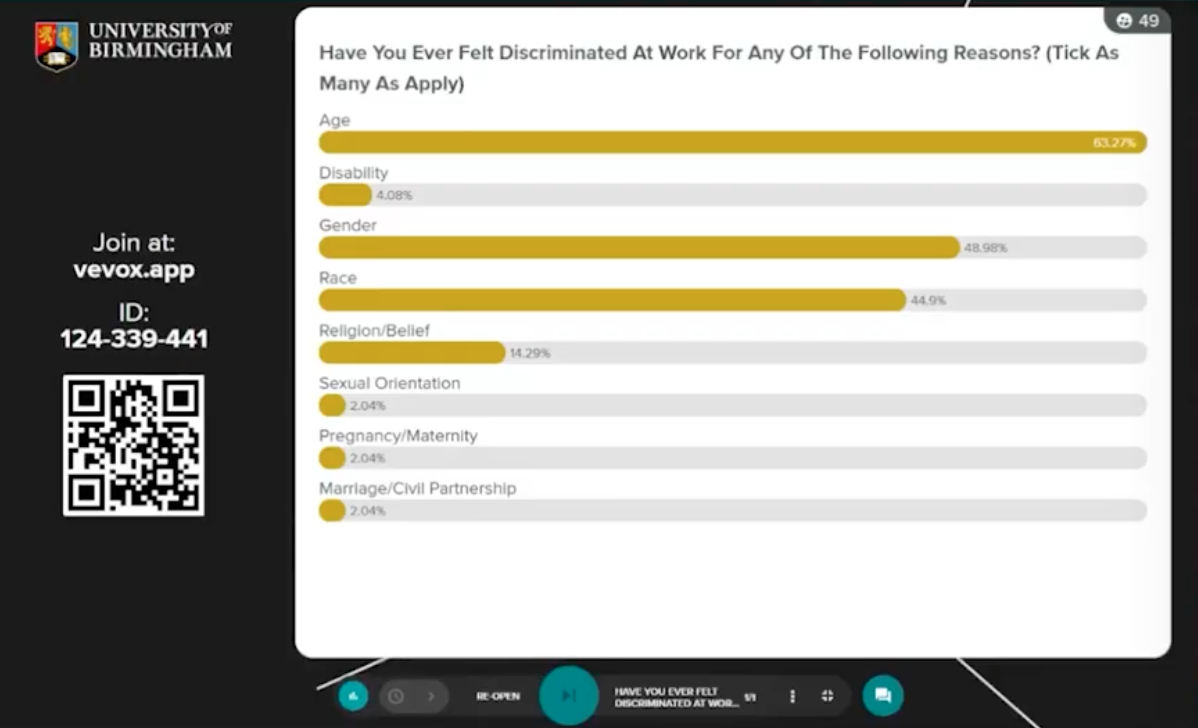
Przychodzki reports clear qualitative and quantitative impact with a lot of positive feeback from students:
-
Increased student participation: “We noticed a shift. many students who never contributed verbally are now responding through the polls.”
-
Improved lecture attendance: “When students know they will have active participation, they are more motivated to attend.”
-
Elevated student confidence: “Because they don’t feel exposed, they engage more and that builds confidence.”
-
Data-driven teaching: Przychodzki says “the real benefit comes when you look at the data afterwards and ask: what did the cohort struggle with?
Tips for other educators
From Przychodzki’s experience at the University of Birmingham Law School, here are actionable take-aways for anyone teaching large classes.
-
Start with an easy single mutiple choice poll in your next lecture to test student engagement.
-
Clearly promote anonymity when you invite contributions, as this helps quieter students to participate.
-
Use poll results as discussion prompts. Don’t just collect responses, use them to spark interaction.
-
Use Q&A thoughtfully. Allow students to ask in real time and revisit unanswered items later.
-
Review the analytics. What percentage engaged? What were the learning gaps? Use that intel to improve.
The future of making every class unmissable and inclusive
Elizabeth Przychodzki’s leadership and the adoption of Vevox at the University of Birmingham Law School illustrate a shift from silent large-lectures to inclusive engagement. By giving all students a voice and a safe mode of participation, Lizzie has helped foster lectures that aren’t just listened to but experienced. Whether you’re teaching 50 students or 500, the principles hold: empower participation, use technology to lower barriers, and make every voice count.
Why not try out Vevox for yourself? Interested in a free pilot of Vevox for your institution then get in touch.