


The Challenge of Engagement and Feedback in Higher Education
In today’s higher-education classrooms, keeping students engaged and providing timely formative feedback are both critical and challenging, especially in large cohorts. In her reflective research on using Vevox in undergraduate psychology lectures, Dr. Laura Jenkins of Loughborough University found that Vevox is not just another EdTech tool, but a transformative platform that boosts participation, supports learning, and creates more responsive teaching environments. (Psychreg Journal of Psychology).
Vevox in Action: Transforming Psychology Lectures
According to the report, Vevox was implemented in foundation and undergraduate psychology modules specifically to “engage students with module content while providing polling activities that allowed instant formative feedback opportunities, while also increasing inclusivity.” (Psychreg Journal of Psychology) Lecturers embedded multiple-choice polls, anonymous Q&A, and word-cloud activities into lectures and students responded positively across the board.
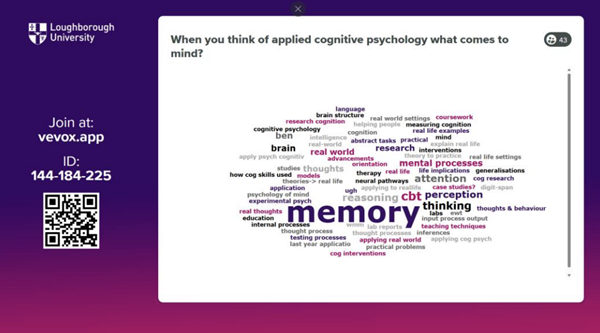
One of the clearest strengths of Vevox highlighted in this academic paper is enhanced engagement through anonymity. Large lecture settings often discourage students from responding aloud. Vevox’s anonymous response system meant “students appreciated the opportunity to receive feedback to monitor their own understanding of the content, and more activities were requested.” (Psychreg Journal of Psychology)
Real-Time Formative Feedback for Student
Vevox also delivered on formative feedback in a way traditional lectures rarely can. Instead of waiting for graded assignments or written comments, students received real-time results on polls and quizzes, enabling immediate clarification of tricky concepts. The platform allowed live visual displays that not only helped students reflect on their own understanding but gave instructors instant insights into comprehension across the cohort.
As Jenkins notes, Vevox “makes giving feedback more interesting; students can see live results and can be provided with instant formative feedback.” (ERIC)
Supporting Educators: Streamlining Feedback Workloads
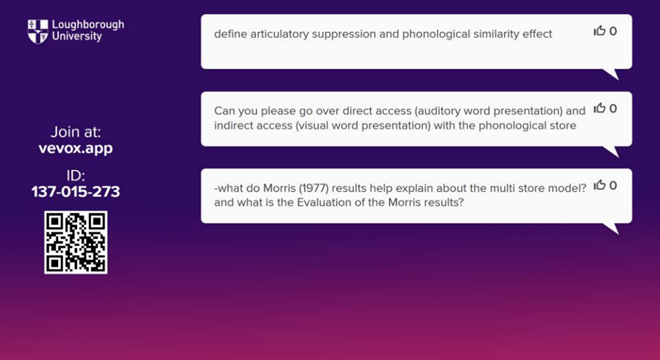
The report also points to Vevox’s role in streamlining the feedback workload for educators. Where written feedback for 300–400 students could take an impractical amount of time, Vevox’s live activities helped maintain momentum and supported more dynamic teaching. (Psychreg Journal of Psychology) Moreover, the flexibility of Vevox activities from multiple-choice questions to word clouds and Q&A sessions allowed instructors to tailor interactions to different class sizes and teaching goals.
Why Vevox Delivers for Learning and Engagement
Beyond student engagement, Vevox’s analytics and reporting features mean that data on participation and responses can be revisited after class, giving lecturers additional tools to refine future sessions and understand trends over time. In short, Vevox’s blend of live interactivity, real-time feedback, and ease of use make it a powerful tool for active learning helping educators create more inclusive, engaging, and responsive classrooms.
For educators seeking tools that not only measure understanding but actively boost it, Vevox clearly delivers.


